


Introducing the Project
WeevilWatch: Smart Pest Monitoring in Ornamental Crops
The project is funded through ADOPT (Accelerating Development of Practices and Technologies), a multi-year funding programme within the UK Defra Farming Innovation Programme, delivered in partnership with Innovate UK. ADOPT supports collaborative grower-led, on-site trials or experiments to generate, test, and demonstrate, innovative solutions that address commercial production challenges.

Project objective
This nine-month project, launched in 2026, directly addresses a production challenge that affects every commercial container-grown ornamental nursery - how to reliably detect vine weevil early enough to make informed control decisions. The WeevilWatch smart monitoring device uses automated surveillance to potentially transform how the pest is managed on nurseries. These monitoring devices will be deployed across production beds at two nurseries and then used to test the following research questions:
- How effective are these devices versus standard crop scouting?
- Can efficacy of the monitoring device be improved by using it together with Andermatt UK's vine weevil lure?
- What is the optimal deployment strategy to achieve cost-effective pest detection?
The project involves a consortium of businesses and organisations including Wyevale Nurseries, Hillview Hardy Plants, Harper Adams University and HTA. It builds on previous Defra, AHDB Horticulture and BBSRC funded research to improve the management of vine weevil in commercial crop production.
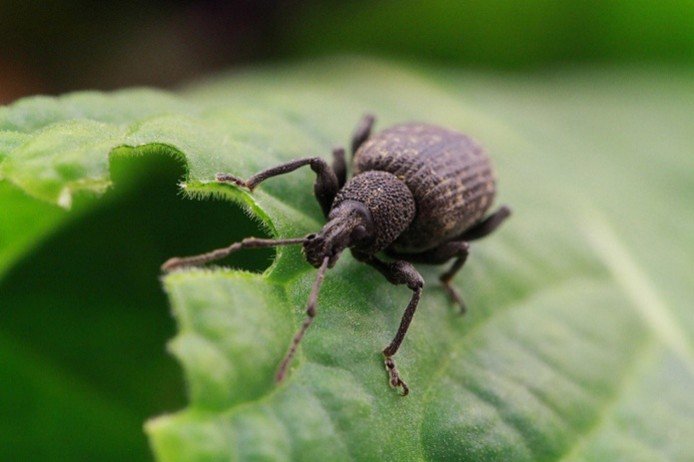
The potential of a smart device to monitor vine weevil activity
Project Delivery
Data to address each part of the project will come from weekly assessments completed at each nursery where 15 monitoring devices will used between May and September. Weekly assessments will include comparing monitoring device detections of vine weevil compared to detections made through standard visual inspections. Work to test the benefits of adding a lure to the monitoring device will use Andermatt UK's Omnilure vine weevil attractant.
At each site, half of the monitoring devices will be fitted with the lure, and the remaining devices will be left without the lure. This data tests whether the added cost of the attractant delivers meaningfully better detection. Finally, an optimal deployment strategy will be determined by recording detection sensitivity and reliability when the density of monitoring devices is varied between blocks of plants. Throughout the project, nursery staff will also provide continuous feedback on device design, alert systems, battery life, weatherproofing, robustness, and practical interpretation and usability.
Project Consortium Members


