

FutureGrow Expo 2024 Case Study Technologies
Vine weevil ‘smart’ monitoring tool
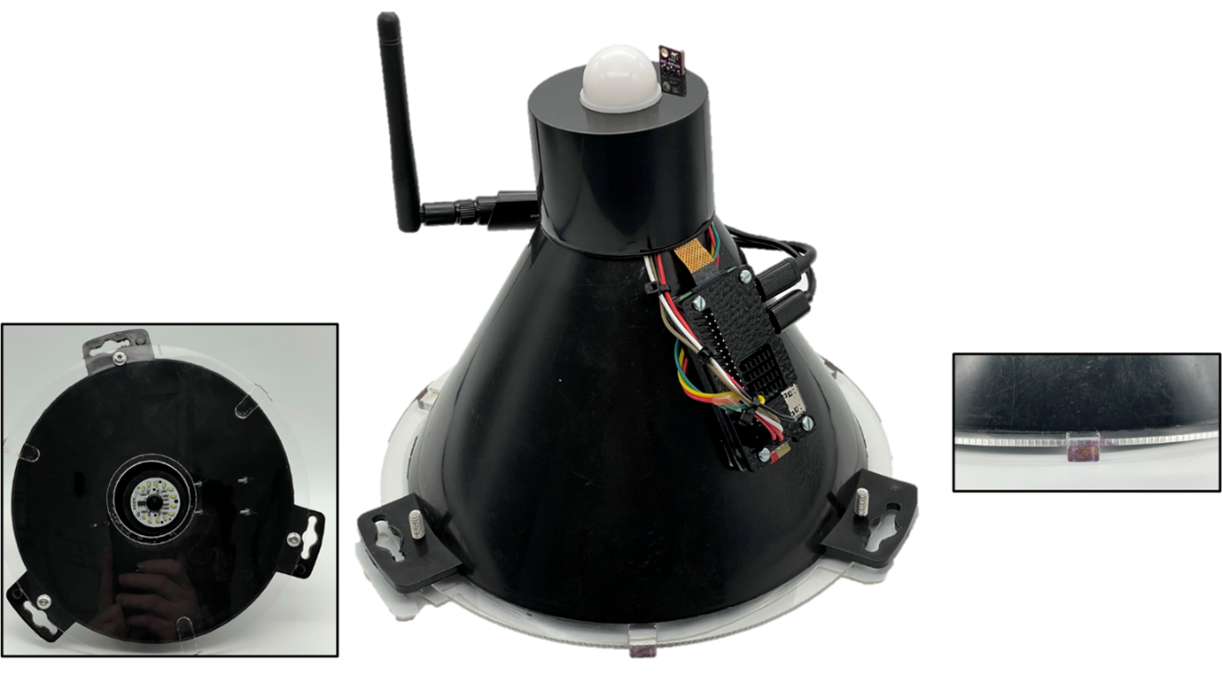
Vine weevil is a destructive pest of ornamental crops. The larvae reduce plant health by feeding on the roots, while adults cause important cosmetic damage by feeding on the leaves. Early detection is vital for control, but the weevils' nocturnal and subterranean habits make manual monitoring difficult and unreliable. To solve this, researchers from the Entomology Group at Harper Adams University have developed a ‘smart’ monitoring tool that automatically detects the presence of weevil adults within crops.
The development of this monitoring tool began with foundational work as part of Defra funded research in which radio frequency identification tags were used to track weevil movements within crops. A major step forward occurred during AHDB Horticulture funded research, which compared the efficacy of available traps and other monitoring tools. While none of the available monitoring tools were found to offer the required reliability and sensitivity, the physical attributes of these designs, such as shape and colour, were found to be important in determining trap efficacy. This fundamental understanding enabled the design of an improved vine weevil monitoring tool.
Building on the work to optimise the physical characteristics of the monitoring tool, an AHDB/BBSRC project led to the integration of digital technologies into the monitoring tools. This included a microprocessor and an infrared camera to act as the device's ‘eyes’ and ‘brain’. The final phase of development involved training a deep learning algorithm to recognize vine weevils from these camera images. This smart monitoring system now achieves 99% accuracy rate in identifying adult weevils under challenging night-time conditions. Positive weevil detections can then be communicated, allowing growers to receive real-time updates on pest activity via Wi-Fi or 4G networks.