

FutureGrow Expo 2024 Case Study Technologies
Vine weevil ‘smart’ monitoring tool
Vine weevil is a destructive pest of ornamental crops. The larvae reduce plant health by feeding on the roots, while adults cause important cosmetic damage by feeding on the leaves. Early detection is vital for control, but the weevils' nocturnal and subterranean habits make manual monitoring difficult and unreliable. To solve this, researchers from the Entomology Group at Harper Adams University have developed a ‘smart’ monitoring tool that automatically detects the presence of weevil adults within crops.
The development of this monitoring tool began with foundational work as part of Defra funded research in which radio frequency identification tags were used to track weevil movements within crops. A major step forward occurred during AHDB Horticulture funded research, which compared the efficacy of available traps and other monitoring tools. While none of the available monitoring tools were found to offer the required reliability and sensitivity, the physical attributes of these designs, such as shape and colour, were found to be important in determining trap efficacy. This fundamental understanding enabled the design of an improved vine weevil monitoring tool.
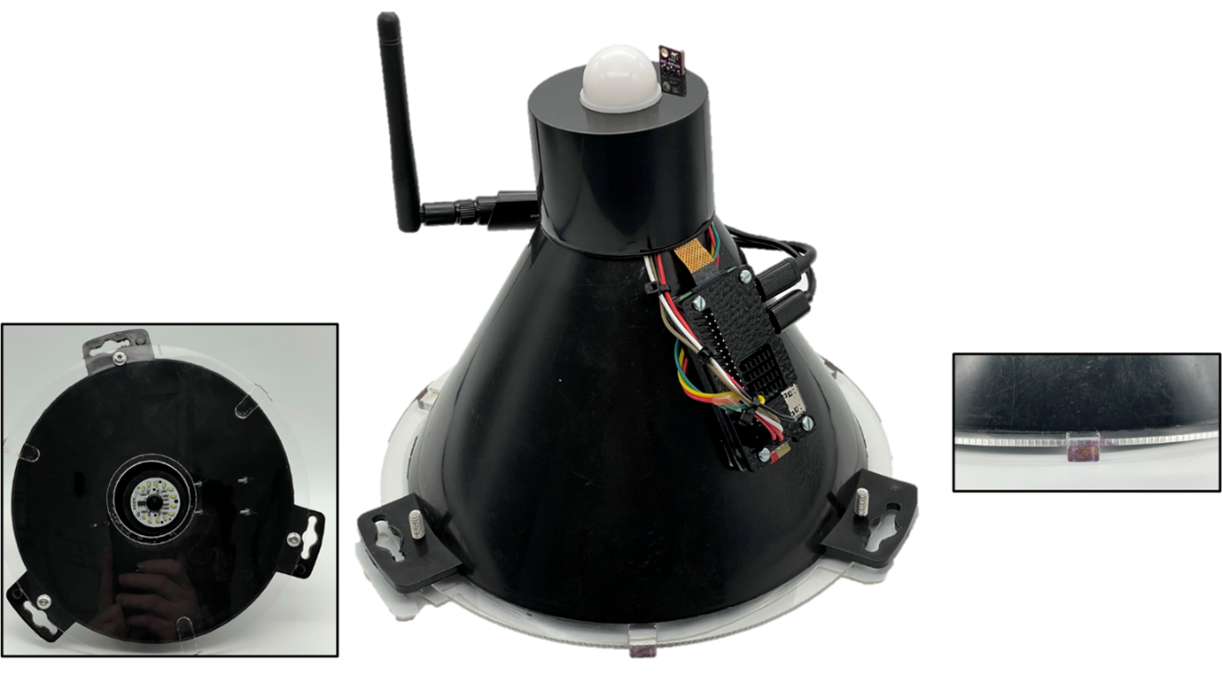
Building on the work to optimise the physical characteristics of the monitoring tool, an AHDB/BBSRC project led to the integration of digital technologies into the monitoring tools. This included a microprocessor and an infrared camera to act as the device's ‘eyes’ and ‘brain’. The final phase of development involved training a deep learning algorithm to recognize vine weevils from these camera images. This smart monitoring system now achieves 99% accuracy rate in identifying adult weevils under challenging night-time conditions. Positive weevil detections can then be communicated, allowing growers to receive real-time updates on pest activity via Wi-Fi or 4G networks.
Jones Engineering – full bed harvesting machine
Field-grown tree and hedging crops are harvested through the winter months when they are not actively growing, and ideally, when they are fully dormant. This is typically from the end of October until early March, but as experienced over recent years, weather conditions can be vastly different from one year to the next, with extremes of prolonged spells of wet/dry and hot/cold weather. This is making the process of growing outdoor crops more challenging than ever.
J & A Growers, Warwickshire, are large-scale wholesale growers of tree and hedging crops with an annual production of around 12 million plants per year. They employ a dedicated grading team throughout the winter, processing around 150,000 trees per day, so crops must be harvested frequently. For many years, the crops have been harvested by single-row machines which are very fast and efficient in good, dry conditions, but this can soon change after rain, meaning this part of the operation can quickly become a bottle neck.
The company felt this was a risk to the business in a wet winter, so the decision was taken to commit to overcoming this problem by finding an engineering business to work with to develop a full bed harvesting machine. This would reduce the number of non-harvesting days and increase the quantity which could be harvested in good conditions.
After some searching, Jones Engineering, South Yorkshire understood the requirement, had the experience needed and were prepared for the challenge. They made frequent site visits to see the crops being harvested by single row machines and became familiar with the current process of what works well, what needs improving, and what the boundaries are.
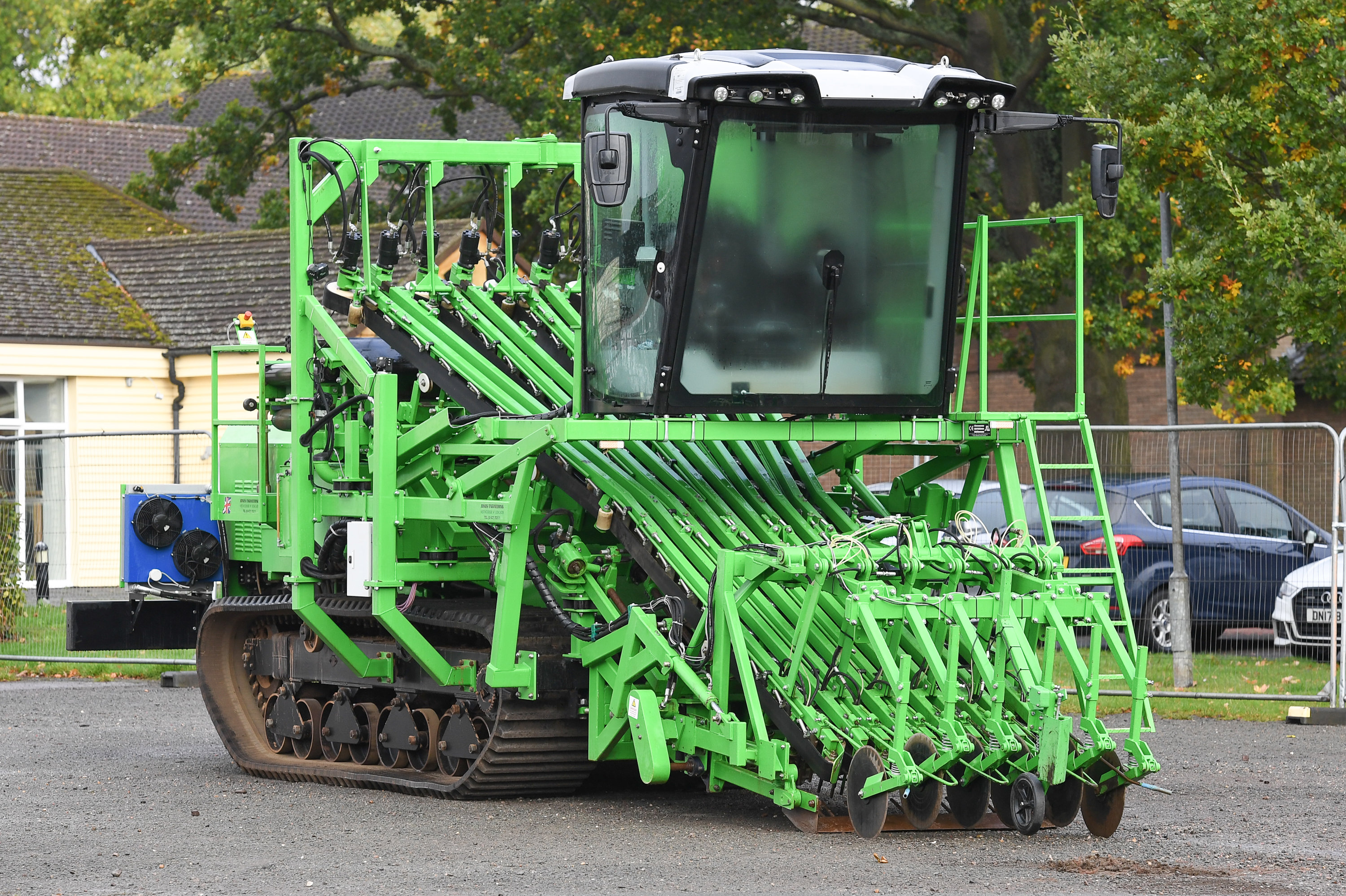
Over the following year, a prototype machine was built and assembled. Once completed, the full bed harvester was transported to J & A Growers and some out of season field testing began. The harvester was used with various crops and eventually under winter conditions, which triggered some new ideas and minor adaptions, as would be expected with a brand-new design. The prototype machine continues to be improved, but it is now the first choice for harvesting many of the crops grown, especially when it becomes too wet for the other machines to travel.
TidyStart Seed Matting
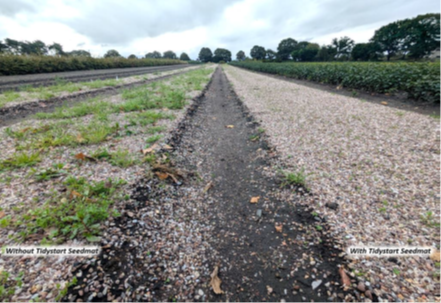
Options for weed control in field-grown tree production are limited as chemicals for soil sterilisation and pre-emergence herbicide products continue to be revoked. Excessive weed growth can prevent seed germination, kill seedlings, and stunt early growth thus affecting quality and yield. Whilst there are available matting products for horticulture and wildflower seed mixes, a unique proposition was required for tree and shrub seeds due to the difference in the production cycle and to allow for ‘just in time’ delivery of stratified seed. Forestart worked to develop a suitable product to meet these needs, adapting existing technology to suit the challenges.
Forest and Land Scotland funding helped to support the early research and development, including the design and construction of the machine to create the matting, and trialling different matting materials. The challenge was to develop a mat that would suppress weeds, slowly degrade, and give additional benefits, such as the correct sowing density for different tree species. The mat had to be easy to roll out onto a field in a range of climatic conditions, using equipment already available on nurseries.
Working with paper-based product manufacturers, a mat that was strong enough to suppress weeds, whilst allowing the roots of the seedling to penetrate into the soil was developed. The mat also had to have sufficient tensile strength to be fed through the machine to have the seeds applied, and then be rolled out onto the nursery beds, but then degrade over time. The top layer was designed to retain moisture next to the seed and then degrade to allow the seedling to break though and grow. Future developments will include impregnating the paper with fertiliser, mycorrhizal fungi or other beneficial additives