

APL and other industry bodies agree on a unified approach to support a new landscaping standard
27 February 2026
Leading landscape and garden design organisations have come together to agree a coordinated, industry-wide approach to supporting the implementation of the new British Standard BS 7533-102, following a meeting hosted by the Horticultural Trades Association (HTA).
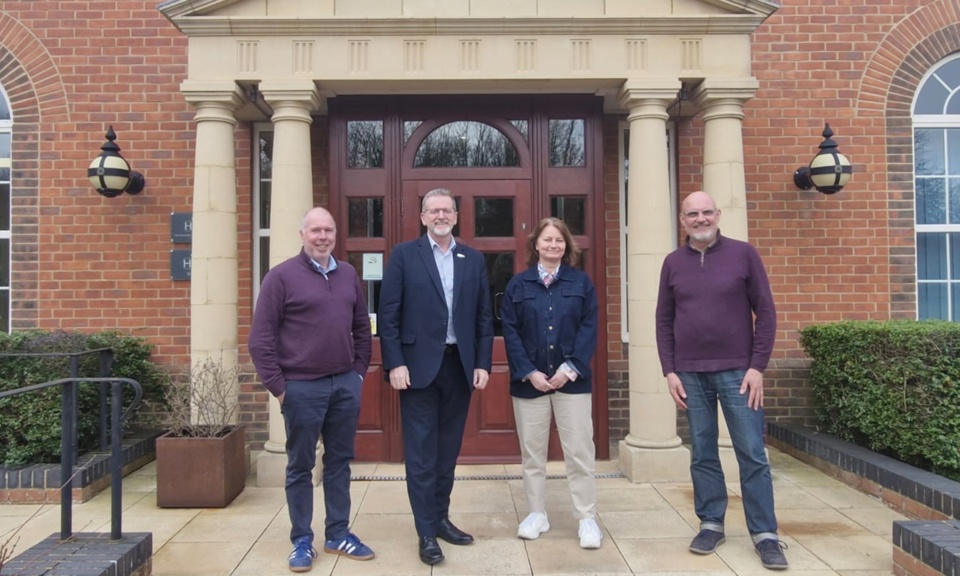
Representatives from the HTA’s Association of Professional Landscapers (APL), the British Association of Landscape Industries (BALI), the Landscape Institute (LI) and the Society of Garden and Landscape Designers (SGLD) met at Horticulture House to discuss how the industry can work together to help members, educators and the wider landscape sector understand and adopt the Standard effectively.
Launched in March 2025, BS 7533-102 represents a significant milestone for landscape and garden construction. For the first time, the Standard includes traffic categories 1-3, making it directly applicable to areas such as pathways, patios, residential driveways, and parking bays, covering a wide range of settings, from domestic gardens to extensive networks delivered and maintained by local authorities, highways, and public spaces.
The Standard provides a clear benchmark for fit-for-purpose installation and construction, helping to define best practice across the sector. While not a legal requirement, it may be used as a reference point in the event of disputes, highlighting its importance in protecting clients and supporting high-quality professional practice.
The meeting between leading garden, landscape and design organisations focused on developing a shared, practical approach to implementation that reflects the realities of the sector. In particular, discussions explored how guidance could cover the whole process from design and specification through to construction and delivery, and how this could be aligned across organisations to support consistency, training and education.
It was agreed that, as first steps, the industry should recognise BS 7533-101 and BS 7533-102 as benchmarks for landscape design and construction, and use them to explore the development of a shared industry Code of Practice or Best Practice framework. It was also agreed that the group should prioritise education as the primary route to achieving industry-wide adoption.
This cross-industry collaboration will ensure consistency of messaging and standards. It will also link with suppliers to ensure they are fully aware of the requirements and that supplies are available.
Phil Tremayne, General Manager of the Association of Professional Landscapers (APL), said:
“This is an exciting step for the industry. It is often thought that the associations should work collaboratively, and this standard has brought us together. There is a lot to do, but together we will be able to provide solutions and support that benefit all sectors.”
Wayne Grills, Chief Executive of BALI, said:
“This is a landmark moment for the industry, with leading bodies coming together to provide clarity and consistency across the sector. BALI is proud to have supported the development and implementation of BS 7533-102, which closely reflects our long-standing commitment to upholding the highest industry standards of workmanship and fostering trust between landscape professionals and their clients. Further collaboration across the industry will be vital to ensuring effective education and adoption, and this unified approach demonstrates our shared ambition to raise standards, strengthen professionalism and build lasting confidence in the value of quality landscaping.”
Tracy Whitfield, Technical & Research Manager for the Landscape Institute, said:
“The Landscape Institute is proud to be part of this collaborative approach, giving the landscape industry a clear, shared benchmark for quality and practical guidance to raise standards across the sector. By working together, we’re enabling professionals to deliver beautiful, consistent and well-built spaces, supporting low-impact sustainable practices that last.”
John Wyer, Vice Chair of the Society of Garden and Landscape Designers (SGLD), said:
“This is an important moment. We are firm believers in working together with our sister organisations, particularly on the issue of standards. Supporting the integration of this standard into the everyday activities of our professional bodies will improve quality for everyone. The parallel Code of Practice is an equally important document, allowing us to look forward together and address many of the issues facing us, such as climate change, biodiversity loss, and diversity and inclusion.”
All parties agreed that this meeting represents an important first step in a longer-term programme of collaboration. By working together, the industry aims to raise standards, strengthen professionalism, support future licensing ambitions, and build greater confidence among clients and the public in the quality and value of domestic landscaping.