

New Environmental Improvement Plan must boost, not burden, British horticulture
1 December 2025
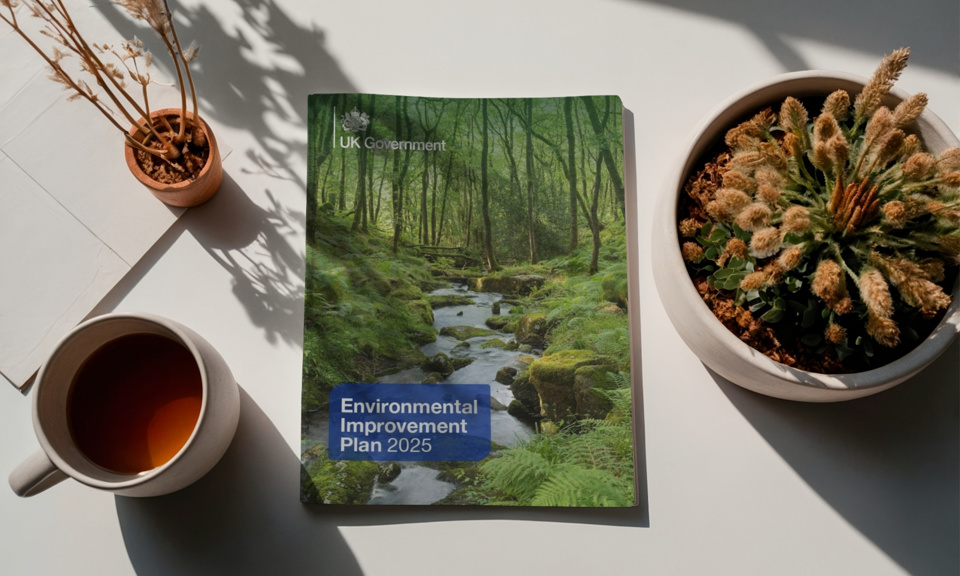
The Government has today (1 December) published the Environmental Improvement Plan (EIP), which follows its rapid review launched in 2024. The plan focuses on how the government will work alongside stakeholders to achieve its nature ambitions. The EIP will inform the content of other key upcoming strategies, such as the Land Use Framework, farming roadmap and the food strategy. Some key measures of relevance to horticulture include:
- Increase the proportion of conifer species contributing to national tree planting. (Commitment 52)
- Build resilience in the supply chain to extreme weather, biosecurity threats and economic shocks by supporting innovation, productivity and capital investment in tree and seed production. (Commitment 54)
- Facilitate initiatives to enhance the quality, quantity and genetic diversity of domestically produced tree seed and planting stock. (Commitment 54)
- Legislate for a ban on the sale of peat and peat-containing products when parliamentary time allows. (Commitment 63)
- Fund water infrastructure, facilitation grants and paludiculture trials. This funding will enable farmers and land managers to make changes to their water management and undertake more sustainable actions on peat. (Commitment 63)
- Operate a SPS imports regime which supports the protection of the UK’s biosecurity, public health and environment, with risks reviewed regularly and controls relevant to current threats. (Commitments 81 and 82)
- Fund land-based providers to deliver a broad range of courses and programmes, including T Levels, and expand provision for apprenticeships in a range of subjects, including agriculture, horticulture, land security, land management, and forestry. (Commitment 5)
- Incentivise farmers and land managers through our agri-environment schemes to implement measures to support farm wildlife alongside productive farming, by providing year-round resources for farmland species. (Commitment 16)
- Introduce Simpler Recycling in England from 2025, ensuring the same recyclable waste streams are collected for recycling from all households and workplaces. (Commitment 48)
- Provide advice on applying the accessible green space and urban greening factor standards as part of the green belt golden rules set out in the National Policy Planning Framework, to ensure that new residents in developments from 2025 can access good-quality green and blue spaces. (Commitment 86)
Jennifer Pheasey, Director of Public Affairs, Horticultural Trades Association (HTA), commented:
“The Horticultural Trades Association (HTA) has long advocated the importance of the recognition of environmental horticulture, the UK’s 22 million private gardens and green spaces, in the delivery of environmental targets. From green jobs to banning peat to boosting tree production, the range of sector-relevant measures in today’s newly published Environmental Improvement Plan brings this point to life.
“For success and to sustain and grow our sector and healthier, wealthier communities, it is critical that the report’s commitment for government to work with business – the sectors who will be growing, implementing, employing and investing – sees a step-change and that there is proper oversight on the interdependencies of these policies. Furthermore, this Plan lands a week after the Budget, which presented additional costs and uncertainty for horticultural businesses, mostly SMEs and many family-owned businesses, who are still grappling with a perfect storm of rising costs. This Plan must boost British horticulture, not burden it. We continue to challenge the cost and risk of poorly designed regulation and overlapping reporting, which too often deliver more cost than policy-benefit.”
“The HTA’s recent Value of Gardens report, our calls for a supported transition to peat-free horticulture, SPS position paper and Strong Roots report on boosting UK tree production focus on the planning, certainty, confidence and support for different aspects of horticulture. We also need the details of the EIP’s commitments and to see further work, such as the land-use framework and farming strategy, which are yet to be published.
“We look forward to being involved in the next phase of the EIP work and reiterate our commitment to see ever greater recognition of the value of HTA members and environmental horticulture.”